How to Pick the Right Garden Bench for Comfort, Style & Durability
A garden bench is more than a place to sit—it’s a space to relax, enjoy your garden, and add character to your outdoor area. Many homeowners, renters, and beginners often wonder how to select the right bench that balances comfort, style, and durability.
If you’ve searched for garden bench designs or a garden bench for sale, you’re likely looking for practical advice on choosing the best option that suits your garden, lifestyle, and budget. This guide will provide clear, actionable steps to help you make the right choice.
Know Your Space and Purpose
Before purchasing it, consider where you’ll place it and how you’ll use it. A bench under a tree, on a patio, or along a garden path will have different requirements. For instance, benches in exposed areas need durable, weather-resistant materials, while shaded spots allow for more delicate designs.
Think about the primary purpose—whether you want a bench for relaxation, social seating, or purely decorative purposes. Also, measure your space to ensure the bench fits comfortably without overcrowding. Standard benches are usually 4 to 6 feet long, but smaller or corner benches may be better for compact gardens.
Placement is key when adding a garden bench. Think about how it interacts with existing elements like pathways, plants, or decorative rocks. Considering inspiring garden layout ideas can help you position your bench in a way that enhances flow, maximizes space, and creates a visually appealing corner in your garden.
Selecting the Right Material
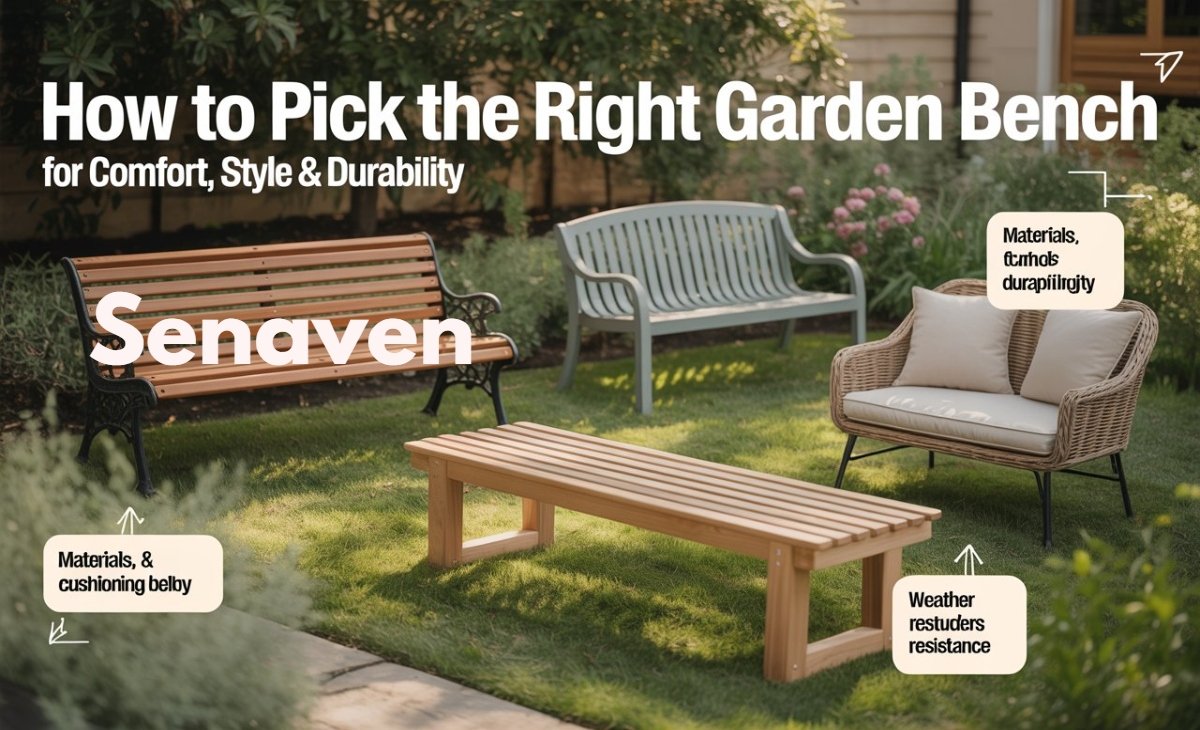
The material affects both comfort and longevity. Wooden benches offer classic charm but require maintenance to prevent rot or insect damage. Metal benches, such as wrought iron or aluminum, are sturdy and often feature intricate designs, though they can become hot in direct sun. Resin or plastic benches are low-maintenance and lightweight but may fade over time, while stone or concrete benches are extremely durable but heavy and less comfortable without cushions.
Comfort Matters
A garden bench should be inviting to sit on. Seat depth, backrest angle, and the presence of armrests all influence comfort. A depth of 16–18 inches and a backrest angled slightly (100–110°) offers proper support. Cushions add comfort, especially for hard materials like metal or concrete. Test benches in showrooms or stores whenever possible to ensure comfort before buying.
Design and Style Considerations
Your garden bench should complement your outdoor decor. Classic wooden slats or wrought iron designs suit traditional gardens, while minimalist metal or concrete benches work for modern landscapes. Rustic reclaimed wood or stone benches blend naturally with greenery. Also consider functional designs such as storage benches or benches with planters, which combine utility with aesthetics.
When choosing It, it’s helpful to think beyond just outdoor furniture. The same principles of balance, proportion, and style that work indoors can guide your choices outside. For instance, exploring creative ways to style your spaces can provide fresh ideas on color coordination, textures, and complementary pieces that make your garden bench feel like a natural part of your environment.
Durability and Maintenance
A durable bench withstands weather and regular use. Wooden benches should be sealed or treated to resist rot, metal benches should be powder-coated to prevent rust, and plastic benches generally require just occasional cleaning. Covering benches during harsh weather or storing them indoors will extend their lifespan.
Key Tips:
- Regularly clean and seal wood benches.
- Use cushions or protective covers to prevent damage.
Budget and Value
Garden benches are available across a range of budgets. Plastic benches are affordable, wooden or aluminum benches fall in the mid-range, and stone or wrought iron benches are higher-end investments. While it might be tempting to go for a cheap option, spending a bit more on durable, weather-resistant benches often saves money in the long run.
Where to Buy a Garden Bench
When searching for a garden bench for sale, consider local furniture stores, online retailers, or specialty garden centers. Look for benches that clearly state material, dimensions, and weight capacity. Read reviews and check for warranty or maintenance guidance. Many online stores also offer customizable designs, letting you select the material, color, and style to suit your garden.
Expert Advice
Before choosing a garden bench, it is essential to evaluate the space where it will be placed and understand how it will be used. If your bench will be located under direct sunlight or exposed to rain, you need a durable, weather-resistant material. The purpose of the bench is equally important; benches intended for relaxation, social seating, or purely decorative use will have different design and size requirements. Measuring the space in advance ensures the bench fits comfortably without obstructing garden paths or other outdoor furniture. Experts also recommend considering how many people will typically use the bench and whether it should blend with existing garden features or act as a focal point.
Conclusion
Choosing the right garden bench means balancing comfort, style, and durability while matching your space and budget. By considering materials, design, and maintenance, you can find a bench that enhances your garden and provides a relaxing spot for years to come. A thoughtfully chosen bench can transform any corner of your garden into a favorite retreat.
FAQs
What is the best material for a garden bench in rainy areas?
Metal or treated wood with protective coatings is ideal, as they resist rot and rust.
How do I choose the right garden bench design?
Consider your garden style—classic wooden slats suit traditional gardens, while sleek concrete or metal benches fit modern landscapes.
Where can I find a garden bench for sale online?
Check reputable online furniture stores, garden centers, and local retailers. Read reviews and verify materials before purchasing.
Can I leave a garden bench outside year-round?
Yes, if it’s made from weather-resistant materials like treated wood, metal, or resin. Use covers in extreme weather.
Are storage benches practical for gardens?
Yes, they provide seating and storage for cushions, garden tools, or blankets, combining functionality with style.