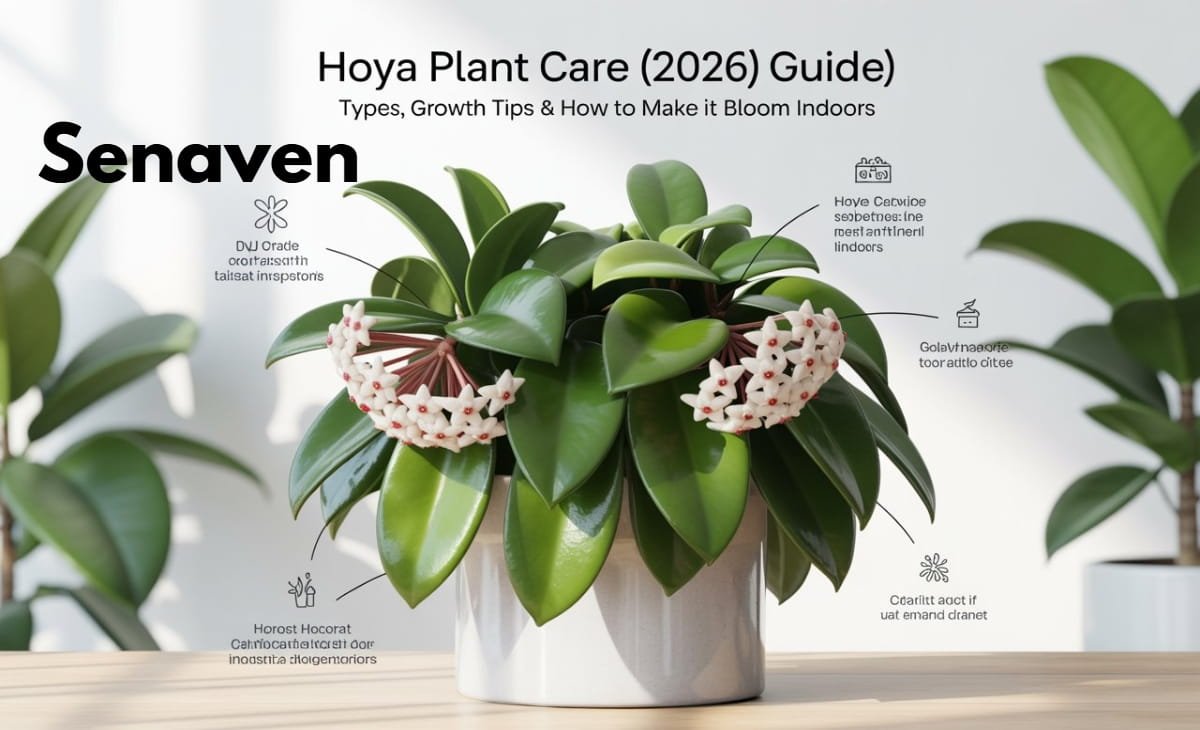
Hoya Plant Care (2026 Guide): Types, Growth Tips & How to Make It Bloom Indoors
The hoya plant is one of the most loved indoor houseplants today because it combines beauty with simplicity. Its thick waxy leaves, trailing vines, and star-shaped flowers make it a perfect choice for apartments, bedrooms, and low-maintenance indoor gardens.
But many plant owners face a common problem: their hoya grows leaves but never blooms. Others struggle with yellowing leaves or slow growth.
This guide solves all of that. You’ll learn exact hoya plant care steps, the best varieties like hoya carnosa, and practical methods to make your plant healthy and flowering indoors.
What is a Hoya Plant?
These plants are tropical vine native to Asia and Australia. It grows slowly but lives for many years when properly cared for. Its leaves are thick and waxy, which helps it store water and survive in dry conditions.
Unlike many indoor plants, hoya is not demanding. In fact, it performs better when slightly “ignored” rather than over-cared for.
The most common and beginner-friendly type. It has thick green leaves and produces fragrant pink or white flowers when mature. It is often the first choice for indoor plant lovers because it is very forgiving. If you are interested in how similar flowering behavior works in garden plants, you can compare it with seasonal bloom cycles of outdoor plants.
Hoya Plant Light Requirements (Most Important Factor)
Light is the number one reason why a hoya either thrives or refuses to bloom.
These plants need bright but indirect sunlight. A spot near an east-facing window is usually ideal because it provides gentle morning light.
If you placed in low light, it will still survive—but it will stop flowering completely and grow very slowly. On the other hand, too much direct sunlight can burn the leaves and cause fading.
Simple rule: Bright room = healthy growth + possible blooms.
Hoya Watering Guide (Avoid This Common Mistake)
Overwatering is the biggest reason hoya plants die indoors.
Because It leaves store water naturally, they don’t need frequent watering. The soil should be allowed to dry out before you water again.
In most homes:
- Summer: Water every 7–10 days
- Winter: Water every 2–3 weeks
If leaves become yellow or soft, it usually means the plant is getting too much water.
A good habit is to touch the soil before watering—never follow a fixed schedule blindly.
Best Soil for Hoya Plant Growth
These plants need airy, well-draining soil. Regular garden soil is too heavy and can cause root rot.
A good hoya soil mix includes:
- Orchid bark for airflow
- Perlite for drainage
- Coco peat for moisture balance
This combination keeps roots healthy and prevents water buildup.
How to Make Hoya Bloom (Expert Tips)
Many people grow healthy hoya plants but never see flowers. Blooming requires specific conditions:
First, the plant needs consistent bright light. Without it, flower buds will not form. Second, avoid cutting old flower stems because it blooms from the same points repeatedly.
Third, slightly root-bound plants often bloom better than those in large pots. Finally, patience is essential. Some it plants take 2–3 years before their first bloom indoors.
There are many varieties, but a few are especially popular for indoor growing. For example, if you want to explore how flowering patterns differ in outdoor ornamentals, you can also check detailed bloom behavior in plants like bloom timing and care in flowering shrubs when comparing seasonal growth patterns.
Popular Types of Hoya Plants
There are many varieties, but a few are especially popular for indoor growing.
Hoya Carnosa
The most common and beginner-friendly type. It has thick green leaves and produces fragrant pink or white flowers when mature. It is often the first choice for indoor plant lovers because it is very forgiving.
Hoya Kerrii
Known as the “heart leaf hoya,” this plant is often sold as a single leaf in a pot. It grows slowly but is visually very unique.
Hoya Pubicalyx
A fast-growing vine with dark green leaves and clusters of pink-purple flowers. It is ideal if you want quicker results.
Hoya Obovata
This variety has round leaves with silver splash patterns and is extremely easy to maintain indoors.
Common Hoya Plant Problems & Fixes
If It is not doing well, the issue is usually one of these:
Yellow leaves usually mean overwatering or poor drainage. Slow growth often indicates low light conditions. If your plant is not flowering, it is almost always due to insufficient sunlight or immaturity.
The good news is that It plants recover easily once the environment is corrected.
Hoya Propagation (Grow New Plants Easily)
It can be easily propagated from stem cuttings. Cut a healthy vine with a few nodes and place it in water or moist soil.
Within a few weeks, roots will start developing. Once strong enough, you can transfer it to a pot with well-draining soil. This is one of the easiest ways to expand your indoor plant collection.
Expert Advice (From Real Hoya Growing Experience)
If there is one thing experienced indoor gardeners agree on, it is this: don’t overcare for your plant. Most beginners unintentionally damage their plant by giving it too much water, frequent repotting, or constantly changing its position.
A healthy hoya actually thrives on consistency and a slightly “neglected” routine. Once you find a bright spot in your home, try not to move it again. Let the soil dry out properly before watering, and avoid heavy fertilizers unless the plant is actively growing.
Another practical insight is patience—many hoya plants take time to mature before they bloom. Instead of chasing flowers early, focus on building strong roots and steady leaf growth first. Once the plant feels stable, flowering usually follows naturally under the right light conditions.
Conclusion
The hoya plant is one of the most rewarding indoor plants for beginners because it is low-maintenance yet visually stunning. Once you understand its basic needs—light, minimal watering, and patience—it becomes very easy to grow and even bloom.
If you are consistent with care and avoid overwatering, your hoya can live for years and become a beautiful trailing indoor vine filled with fragrant flowers.
FAQs
Is It plant good for beginners?
Yes, It is one of the easiest indoor plants and is perfect for beginners.
How often should I water It?
Only when the soil is dry. Usually every 7–10 days in summer.
Why is my hoya not blooming?
Most likely due to low light or the plant not being mature enough.
Can It grow indoors without sunlight?
It can survive in low light but will not flower properly.
What is the best hoya for indoors?
It carnosa is the most popular and beginner-friendly variety.