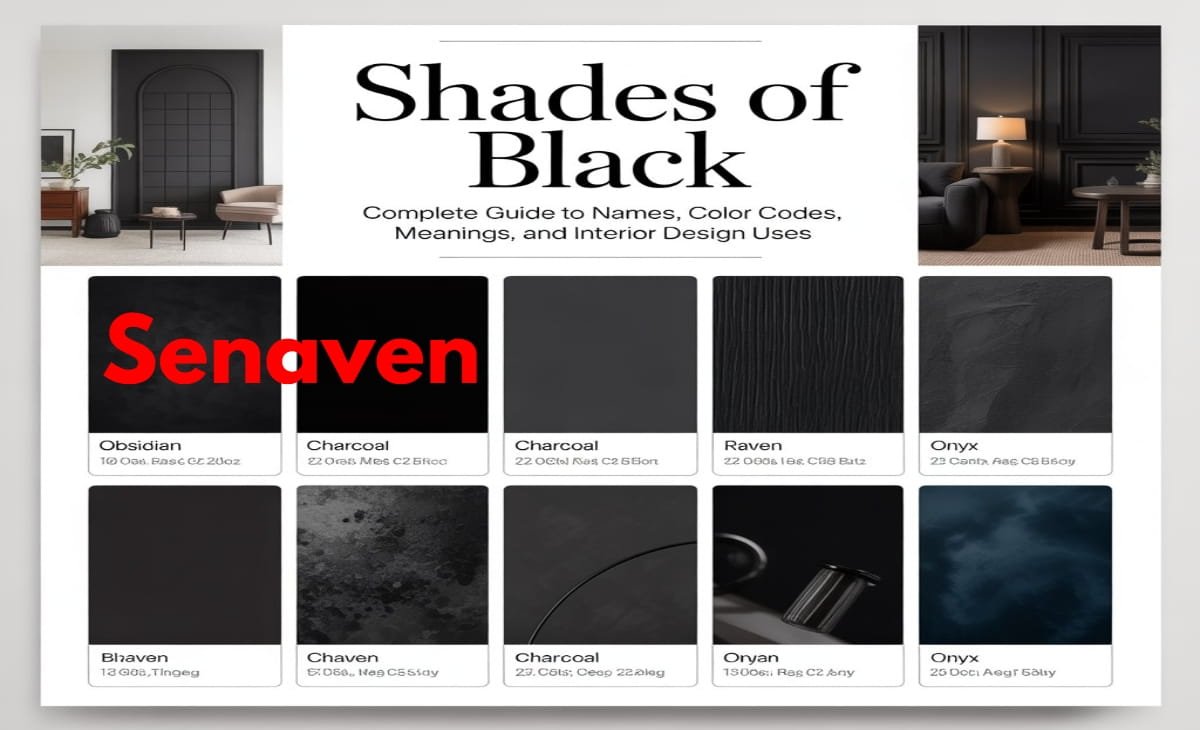
Shades of Black: Complete Guide to Names, Color Codes, Meanings, and Interior Design Uses
At first glance, black might seem like the simplest color to choose for your home. But once you start exploring, you quickly realize there isn’t just one black—there are dozens of shades of black, each with its own tone, undertone, and personality.
This is exactly why many homeowners end up frustrated. You pick “black” paint, apply it on your wall, and suddenly it looks blue, gray, or even slightly green. That’s not a mistake—it’s how black actually works.
In this complete guide, you’ll learn:
- All major shades of black color names
- Their color codes (HEX/RGB)
- The meaning and mood behind each shade
- How to choose the right black for your home
- Practical ways to use black in real spaces
If you want a result that looks intentional—not accidental—this guide will help you get there.
What Are Shades of Black?
Shades of black are variations of pure black created by mixing in small amounts of other colors like gray, blue, brown, or green. These subtle additions are called undertones, and they are what make one black feel completely different from another.
In real homes, lighting plays a huge role. A black shade that looks neutral in a store can appear cool or warm depending on sunlight, bulb temperature, and surrounding colors. That’s why understanding undertones is not optional—it’s essential if you want a polished result.
Complete List of Shades of Black (Names + Color Codes)
Below is a practical reference of commonly used shades of black names and their color codes. These are widely used in paint, digital design, and interior styling.
- Jet Black — HEX: #000000
- Rich Black — HEX: #010B13
- Charcoal Black — HEX: #36454F
- Onyx — HEX: #353839
- Ebony — HEX: #555D50
- Black Olive — HEX: #3B3C36
- Licorice — HEX: #1A1110
- Raisin Black — HEX: #242124
- Outer Space Black — HEX: #414A4C
- Gunmetal Black — HEX: #2A3439
These shades may look similar at first, but when applied to walls, furniture, or decor, their differences become very noticeable—especially under different lighting conditions.
Understanding Warm vs Cool Black Tones
Not all blacks feel the same, and the reason comes down to undertones. Some blacks lean cool with hints of blue or gray, while others feel warm due to brown or red undertones.
Cool blacks tend to create a modern, sharp, and slightly dramatic atmosphere. They work well in contemporary interiors, offices, and spaces where you want a clean, minimal look. On the other hand, warm blacks feel softer and more inviting. They blend beautifully with wood, textiles, and traditional decor styles, making them ideal for living rooms and bedrooms.
Neutral blacks sit somewhere in between and are often the safest choice if you’re unsure. They don’t lean too warm or too cool, making them versatile across different spaces.
What Do Different Shades of Black Mean?
Color isn’t just visual—it also affects how a space feels. Different shades of black carry slightly different meanings and moods.
Pure black represents sophistication, power, and elegance, but it can also feel intense if overused. Charcoal and softer blacks suggest stability and calmness, making them easier to live with daily. Warmer blacks often feel grounded and cozy, while cooler blacks can feel sleek and professional.
In home design, this means your choice of black directly impacts the emotional tone of your space. A harsh black might feel dramatic, while a softened black can feel relaxing and balanced.
How to Choose the Right Shade of Black for Your Home
Choosing the right black isn’t about picking the darkest option—it’s about choosing what works in your specific space.
Lighting should always be your starting point. Natural daylight reveals undertones clearly, while artificial lighting can either warm up or cool down the color. That’s why testing samples on your wall and observing them throughout the day is one of the most important steps.
Room size also matters. Deep blacks can make small rooms feel tighter, while softer blacks or charcoal shades create depth without overwhelming the space. In larger rooms, darker blacks can actually add a sense of intimacy and structure.
Finally, consider what already exists in your room. Flooring, furniture, and decor all influence how a black shade will appear. A cool black next to warm wood flooring can feel mismatched, while a warm black will blend more naturally.
Best Ways to Use Shades of Black in Interior Design
1. Accent Walls
Using black on a single wall is one of the safest and most effective ways to introduce it into your home. It creates depth and a focal point without overwhelming the entire room. Softer blacks or charcoal shades work best here because they add drama without feeling too heavy.
2. Furniture and Cabinets
Black furniture is timeless, but the shade you choose defines the style. Matte black creates a modern look, while warmer blacks feel more classic and comfortable. In kitchens, black cabinets paired with light countertops and backsplashes create a balanced, high-end appearance.
3. Small Spaces
Black can absolutely work in small rooms if used correctly. The key is to avoid overly harsh blacks and instead go for softer tones. Pairing black with mirrors, light-colored decor, and good lighting helps prevent the space from feeling closed in.
4. Decorative Accents
If you’re hesitant to commit, start small. Black can be introduced through lighting fixtures, frames, handles, or textiles. This allows you to test how different shades feel in your space without making permanent changes.
Common Mistakes to Avoid When Using Black
Many people struggle with black simply because they skip a few critical steps.
One of the biggest mistakes is choosing a shade without testing it at home. Store lighting is very different from residential lighting, and this can completely change how a color looks.
Another common issue is ignoring undertones. A black with a blue undertone might look perfect in the store but feel too cold once applied. Similarly, using too much pure black can make a space feel heavy and uninviting.
Texture is also often overlooked. Black surfaces need contrast through materials like wood, fabric, or metal to feel rich and layered rather than flat.
Pros and Cons of Using Shades of Black
Pros
- Creates a bold, elegant, and timeless look
- Works well with almost all color palettes
- Adds depth and contrast to interiors
- Can highlight architectural features
Cons
- Can make spaces feel smaller if overused
- Shows dust, smudges, and fingerprints easily
- Requires proper lighting to look its best
- Difficult to repaint compared to lighter colors
Shades of Black in Fashion and Salon Trends
Beyond interiors, “shades of black salon” searches often refer to hair color variations. In salons, black isn’t just one tone—it includes soft black, natural black, blue-black, and brown-black shades.
The same principle applies here: undertones matter. Blue-black hair looks bold and dramatic, while brown-black appears softer and more natural. This crossover shows how universally important black variations are, whether in design or personal styling.
Expert Advice: How Professionals Use Shades of Black
Professionals use black with intention, not as a default choice. Instead of pure jet black, they often choose softer shades like charcoal or off-black for walls because these feel less harsh and more livable.
They also layer different shades of black—such as combining matte black fixtures with warmer or cooler black tones—to add depth and avoid a flat look. Lighting is always tested before finalizing, since black can shift undertones depending on the environment.
Most importantly, experts balance black with lighter elements like wood, whites, or neutrals and mix textures (matte, gloss, fabric) to keep the space from feeling heavy.
Conclusion
Black is far more complex than it appears. Understanding the different shades of black, their undertones, names, and color codes allows you to make confident decisions instead of guessing.
Whether you’re painting a wall, choosing furniture, or updating decor, the right shade of black can elevate your space from ordinary to intentional. The key is simple: test before you commit, match undertones with your space, and use black thoughtfully rather than excessively.
FAQs
How many shades of black are there?
There are dozens of shades of black, each created by mixing black with other colors like gray, blue, or brown. The exact number varies depending on classification.
What is the most commonly used black color code?
The most common is pure black with HEX code #000000, but designers often prefer softer blacks like charcoal (#36454F) for interiors.
Which shade of black is best for walls?
Charcoal or soft black is usually the best choice because it adds depth without making the room feel too dark or heavy.
What is the difference between jet black and charcoal black?
Jet black is deeper and more intense, while charcoal black is slightly lighter with gray undertones, making it more versatile.
Are shades of black used in salons different from paint shades?
The concept is the same—undertones define the look. In salons, variations like blue-black or brown-black are used to achieve different hair color effects.