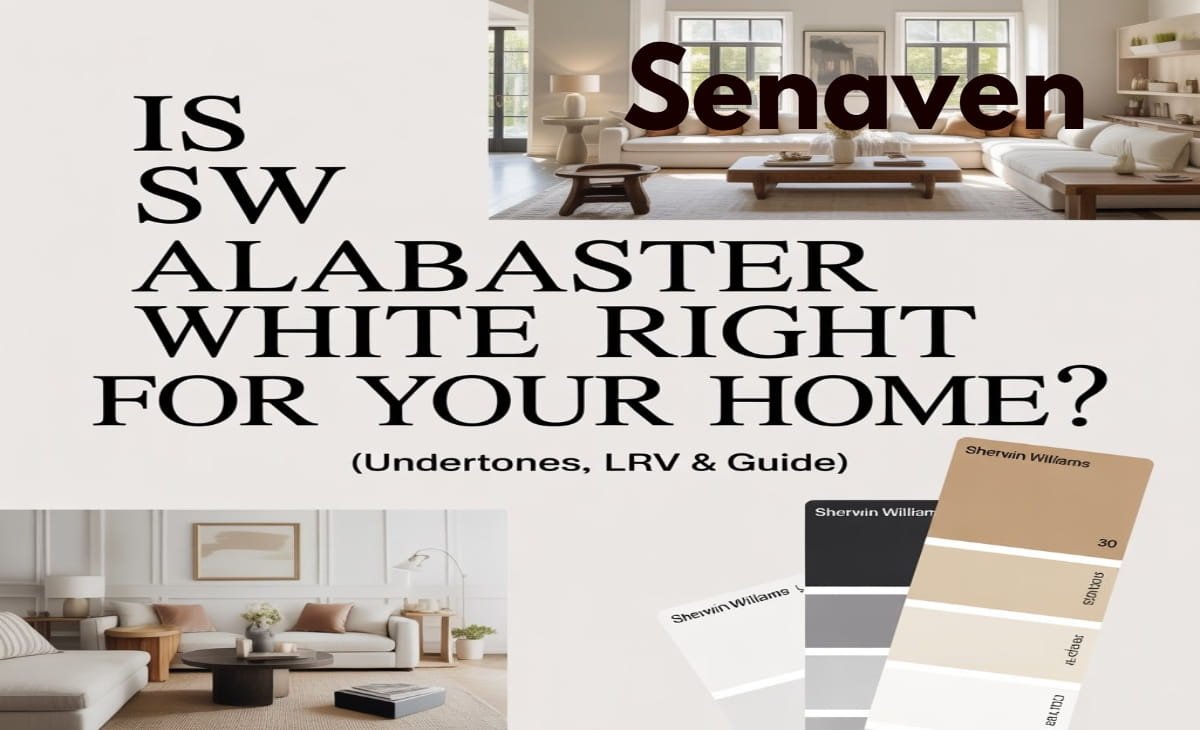
Is SW Alabaster White Right for Your Home? (Undertones, LRV & Guide)
Finding the right white paint can feel frustrating. You pick a shade that looks perfect in-store, but once it’s on your walls, it suddenly looks too yellow, too dull, or too cold.
That’s exactly why so many homeowners search for SW Alabaster White. It’s widely recommended—but is it actually the right choice for your home, lighting, and style?
This guide goes beyond surface-level advice. You’ll learn how SW Alabaster really behaves in different conditions, how it works on cabinets and exteriors, what colors pair best with it, and how it compares to other popular whites. By the end, you’ll have a clear, confident answer.
What Is SW Alabaster White Paint?
SW Alabaster White (Sherwin-Williams SW 7008) is a soft, warm white paint that sits between a true white and a creamy off-white. It’s designed to feel bright without being harsh, and warm without looking overly yellow.
Unlike stark whites that can feel clinical, Alabaster adds a subtle softness that works well in real homes—especially where comfort matters just as much as brightness.
SW Alabaster White Undertones Explained
One of the most common questions is: “What undertones does SW Alabaster White have?”
Alabaster has gentle warm undertones, often described as a mix of beige and very soft yellow—similar to other warm neutrals like this timeless beige paint option, which is known for its balanced and versatile look in real homes. However, these undertones are muted, which is why the color doesn’t usually feel obviously creamy.
In practice, this means:
- In bright natural light, it looks like a clean, soft white
- In warmer lighting, the creamy side becomes slightly more visible
- In darker rooms, it can lean toward a subtle beige tone
This balance is exactly what makes it so versatile—but also why testing it in your own space is important.
SW Alabaster White LRV (Why It Matters)
The Light Reflectance Value (LRV) of SW Alabaster is 82, which means it reflects a good amount of light without being overly bright.
Instead of feeling sharp or glaring, it softly bounces light around the room. This makes it especially useful in spaces where you want brightness without harsh contrast.
For example, in a living room with natural sunlight, it will feel airy. In a bedroom, it helps create a calm and restful environment rather than a stark one.
How SW Alabaster White Looks in Real Homes
Lighting changes everything with this color. In south-facing rooms, it appears warm and inviting, while in north-facing spaces, it can look more neutral and slightly muted.
Under warm artificial lighting, the creamy undertones become more noticeable, which can make the space feel cozy. Under cooler LED lights, it shifts closer to a neutral white.
This is why many homeowners feel confused after painting—it’s not the paint changing, it’s the lighting revealing different sides of it.
SW Alabaster White Kitchen Cabinets: Is It a Good Choice?
SW Alabaster White is a popular choice for kitchen cabinets because it avoids the harshness of pure white while still looking clean and elegant.
Why It Works Well for Cabinets
- It hides minor stains and wear better than bright white
- It pairs beautifully with natural materials like wood and stone
- It creates a warm, welcoming kitchen rather than a sterile one
What to Watch Out For
- In kitchens with very cool lighting or gray countertops, it may appear slightly creamy
- If you want a sharp, ultra-modern kitchen, it may feel too soft
In real-life use, many homeowners prefer Alabaster for cabinets because it feels more “livable” over time.
Using SW Alabaster White for Exterior Walls
SW Alabaster White is also widely used for home exteriors because it offers a softer alternative to stark white paint.
On the outside of a home, it reflects sunlight beautifully without looking blinding. It works especially well with traditional, farmhouse, and transitional styles.
Where It Performs Best
- Homes with stone, brick, or wood accents
- Warm climates where harsh white can feel too bright
- Designs that aim for a timeless, elegant look
Potential Drawback
In very bright sunlight, it can appear warmer than expected, so pairing it with the right trim color is important.
SW Alabaster White Coordination Colors
Choosing the right coordinating colors makes a big difference in how Alabaster looks.
Best Colors to Pair With SW Alabaster
- Soft grays for balance
- Warm wood tones for depth
- Charcoal or black for contrast
- Muted greens like sage for a natural feel
Colors to Be Careful With
- Very cool whites (they can make Alabaster look yellow)
- Bright, icy blues (can create an unbalanced contrast)
When paired correctly, Alabaster becomes a flexible base that ties the entire room together.
SW Alabaster White vs Pure White
This is one of the most searched comparisons, and the difference is noticeable in real spaces.
SW Alabaster is warmer and softer, while Pure White is cleaner and slightly cooler. If you prefer something less warm, you might consider a cooler soft white alternative for a more crisp and modern feel. If you compare them side by side, Alabaster will feel more relaxed and inviting, whereas Pure White feels sharper and more modern.
In practical terms, Alabaster is better for cozy, lived-in homes, while Pure White suits minimalist or contemporary designs.
Common Concerns: Does SW Alabaster Look Yellow?
This concern comes up frequently, and the honest answer is: sometimes, but not usually.
It can appear slightly creamy or yellow in spaces with warm lighting or when placed next to very cool tones. However, on its own or with balanced décor, it typically reads as a soft white.
Most homeowners who test it properly find that it looks neutral enough for everyday use.
Is SW Alabaster White Right for Your Home?
SW Alabaster works best if you want a white that feels comfortable, not cold. It’s ideal for people who want brightness without the harshness of pure white.
It may not be the right choice if your goal is a crisp, ultra-modern aesthetic or if your space has very cool-toned finishes that could clash with its warmth.
The safest approach is always to test it in your space, observe it throughout the day, and see how it interacts with your flooring, furniture, and lighting.
Expert Advice: Getting the Best Results with SW Alabaster White
Most issues with SW Alabaster White come from lighting and coordination, not the color itself.
Always test it in your space using a larger sample and check it throughout the day. Its undertones can shift depending on natural and artificial light.
Also, match it with the right surroundings. It works best with warm or neutral elements, while very cool tones can make it look more creamy than expected. Pairing it with a slightly brighter white for trim can also create a clean, balanced look.
In simple terms, treat Alabaster as a warm neutral, not a crisp white—and it will perform much better.
Conclusion
SW Alabaster White is one of the most reliable and versatile white paints available today. Its soft warmth, balanced brightness, and adaptability make it a favorite for walls, cabinets, and even exteriors.
What makes it stand out is not just how it looks on a sample card, but how it performs in real homes. It creates spaces that feel welcoming, calm, and timeless.
If that’s the feeling you want in your home, SW Alabaster is definitely worth considering—just make sure to test it first so you see how it truly behaves in your environment.
FAQs
What undertones does SW Alabaster White have?
It has soft warm undertones with a slight beige and creamy influence, but they are subtle enough to still look like a true white in many settings.
Is SW Alabaster White good for kitchen cabinets?
Yes, it’s a popular cabinet color because it feels warm and clean without being too stark or difficult to maintain.
What is the LRV of SW Alabaster White?
Its LRV is 82, meaning it reflects a lot of light while maintaining a soft, non-harsh appearance.
Can SW Alabaster be used on exterior walls?
Yes, it works well for exteriors, especially if you want a softer, more timeless white instead of a bright, glaring finish.
What colors go best with SW Alabaster White?
It pairs well with warm woods, soft grays, charcoal tones, and muted greens, creating a balanced and cohesive look.