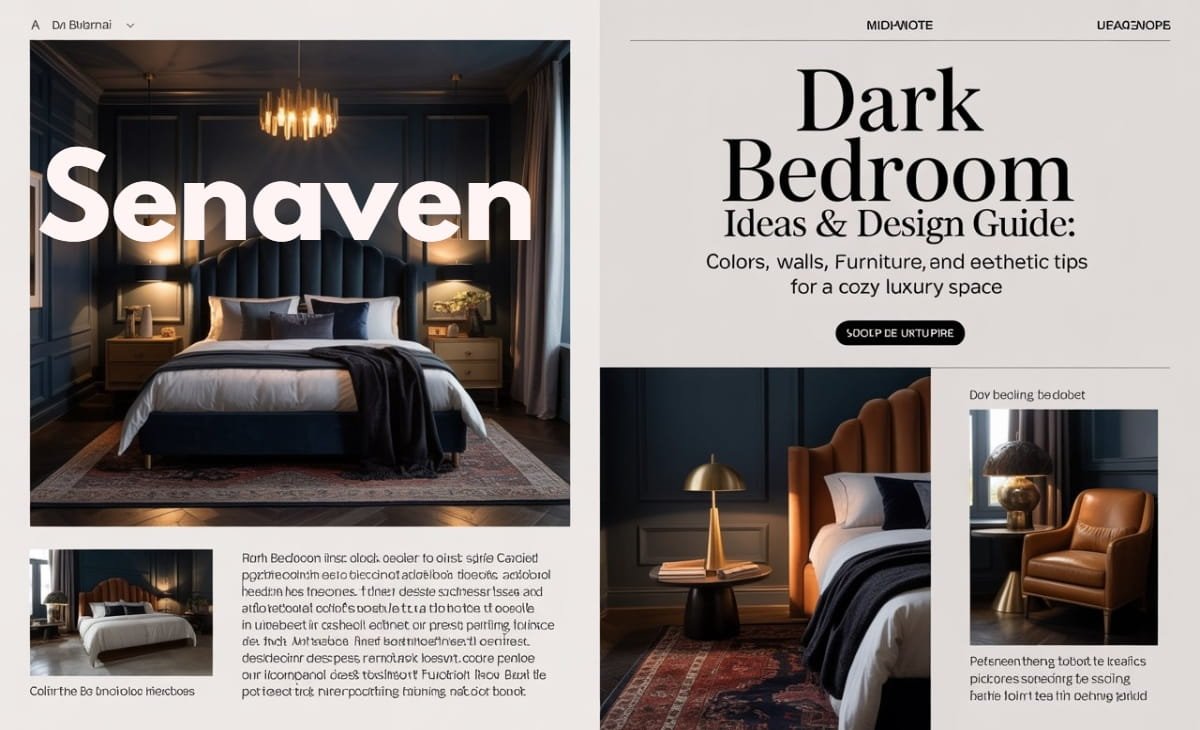
Dark Bedroom Ideas & Design Guide: Colors, Walls, Furniture, and Aesthetic Tips for a Cozy Luxury Space
A dark bedroom is one of the most powerful interior design choices for creating a cozy, moody, and luxurious atmosphere. Unlike traditional bright bedrooms, a dark bedroom design focuses on depth, contrast, and texture to build a space that feels calm, intimate, and visually rich.
Many people search for terms like It aesthetic, dark bedroom colors, or dark bedroom wallpaper because they want a room that feels stylish but also relaxing. The challenge is not choosing dark shades—but using them correctly so the space doesn’t feel heavy or closed in.
This guide explains everything in detail—from wall colors and paint choices to furniture styling and wallpaper ideas—so you can confidently design a dark bedroom that looks intentional, modern, and comfortable.
Understanding Dark Bedroom Design (Why It Works So Well)
It design is built around deep tones like black, charcoal, navy, forest green, and chocolate brown. These colors absorb light, which helps reduce visual clutter and creates a peaceful sleeping environment.
The reason this design style works so well is because it changes how we perceive space. Instead of focusing on brightness, it focuses on mood, texture, and depth. When balanced properly, a dark bedroom feels like a luxury hotel suite rather than a small or closed room.
Dark Bedroom Colors That Actually Work (Not All Dark Shades Are Equal)
Choosing the right It colors is the foundation of the entire design. Not every dark shade gives the same effect. Popular and effective options include charcoal grey for a modern minimalist feel, navy blue for calm and depth, and you can explore forest green dark bedroom colors for a natural and rich atmosphere.
Popular and effective options include charcoal grey for a modern minimalist feel, navy blue for calm and depth, forest green for a natural and rich atmosphere, and matte black for a bold luxury aesthetic. Warm browns also work well if you want a softer, earthy feel.
The key is balance. Pure black walls alone can feel too harsh, so designers usually pair dark shades with warm neutrals or natural textures like wood and linen.
Dark Bedroom Paint Colors (How to Choose the Right Finish)
When selecting It paint colors, the finish matters as much as the shade. Matte finishes are the most popular because they reduce reflection and create a soft, velvety look on the walls.
Eggshell finishes can also work if you want slightly more light reflection without losing depth. Avoid overly glossy paints in a dark bedroom because they can create unwanted glare and ruin the cozy atmosphere.
A practical approach is to use darker paint on the main wall behind the bed and slightly lighter tones on surrounding walls for balance. A practical approach is to balance darker shades with lighter tones such as Snowbound Sherwin Williams white for contrast walls to keep the space open and visually balanced.
Dark Bedroom Walls: Feature Wall vs Full Room
One of the most important decisions in a dark bedroom design is whether to go fully dark or use a feature wall.
A full dark room works best in larger bedrooms with good lighting. It creates a dramatic, immersive experience that feels luxurious and modern.
A feature wall approach is better for small rooms. In this style, only one wall—usually behind the bed—is painted dark, while the rest remain lighter. This keeps the room open while still achieving the dark aesthetic.
Adding texture to walls, such as paneling or paint effects, can also enhance depth and prevent flatness.
Dark Bedroom Wallpaper Ideas for Depth and Texture
If you want to add personality without overwhelming the space, Its wallpaper is an excellent option. Unlike paint, wallpaper introduces patterns and texture that bring life to dark tones.
Common choices include subtle geometric patterns, dark floral designs, textured fabric-style wallpaper, and metallic accents in gold or bronze. These elements help break up solid dark colors and add visual interest.
Wallpaper works especially well on a single accent wall, making the bed area the focal point of the room.
Dark Bedroom Furniture: Choosing the Right Pieces
Its furniture should complement the walls, not compete with them. The goal is balance and contrast.
Wooden furniture adds warmth and prevents the space from feeling too cold. Black or charcoal furniture blends into the background for a seamless aesthetic. Upholstered furniture in velvet or linen adds softness and luxury.
Avoid overcrowding the room with bulky furniture. It design works best when it feels open, minimal, and intentional.
Dark Bedroom Aesthetic: How to Achieve the Look
The dark bedroom aesthetic is more than just paint—it’s about the overall mood. This style combines lighting, texture, and color harmony to create a cohesive visual experience.
Soft warm lighting is essential. Table lamps, wall sconces, and hidden LED strips help balance dark tones. Natural textures like wood, wool, and linen prevent the space from feeling too harsh.
Adding small decorative elements like framed art, indoor plants, or metallic accents completes the aesthetic without overwhelming the design.
Dark Bedroom Background Ideas (For Social Media & Visual Appeal)
Many people also search for dark bedroom background ideas, especially for photography or social media setups. A well-designed It naturally creates a cinematic background.
To enhance this, focus on layered lighting behind the bed, textured walls, and minimal but intentional décor. A clean, uncluttered bed setup with contrasting pillows or throws also improves visual appeal.
Practical Tips to Make a Dark Bedroom Work in Any Space
Even small bedrooms can successfully use dark design if done correctly. The key is balance.
Keep ceilings lighter to avoid a boxed-in feel. Use mirrors to reflect light and expand the space visually. Limit furniture to essential pieces only. And always combine dark tones with warm lighting to maintain comfort.
Expert Advice for Designing a Perfect Dark Bedroom
When designing a dark bedroom, the biggest mistake is treating darkness as the main goal instead of atmosphere. A well-designed space is never fully dark in every element—it is layered. Professionals always balance deep wall colors with lighter textures, warm lighting, and natural materials so the room feels rich instead of heavy. If you want a truly successful It design, focus on contrast rather than uniform darkness. Even a small highlight like a warm wooden side table, soft beige bedding, or indirect lighting can completely change the mood of the space and make it feel intentionally designed rather than accidentally dark.
CONCLUSION
A dark bedroom design is one of the most effective ways to create a cozy, modern, and luxurious personal space. When you carefully choose the right It colors, wall treatments, furniture, and lighting, the result is not just stylish—it becomes emotionally comforting.
Instead of being afraid of dark tones, think of them as tools for depth and atmosphere. With the right balance, even a small room can feel elegant, calm, and high-end.
FAQs
What is the best color for a dark bedroom design?
Charcoal, navy blue, forest green, and matte black are the most popular choices because they create depth without feeling flat.
Is a dark bedroom a good idea for small rooms?
Yes, but it works best when you use a feature wall and combine it with lighter accents and mirrors.
What type of lighting is best for a dark bedroom aesthetic?
Warm, layered lighting such as bedside lamps, wall sconces, and indirect LED lighting works best.
Should I use wallpaper or paint in a dark bedroom?
Both work well. Paint gives a clean look, while wallpaper adds texture and personality.
What furniture works best in a It?
Wood, matte black, and upholstered furniture work best because they balance depth with warmth.