Flat Paint Explained: Difference from Matte, Eggshell & Where to Use It in Your Home
When people search for flat paint, they’re usually trying to answer one simple question: Is this the right paint finish for my home?
The confusion gets bigger when similar options like matte and eggshell come into play. Many homeowners end up choosing the wrong finish—only to regret it when the walls become hard to clean or start showing marks.
This guide is designed to fully solve that problem. You’ll not only understand what It is, but also how it compares to other finishes, where to use it (and where not to), and how to make the right choice for every room.
What Is Flat Paint?
It is a finish with no shine at all, which means it absorbs light instead of reflecting it. This gives walls a soft, smooth, almost powdery appearance that many people find elegant and modern.
Because it doesn’t reflect light, It is excellent at hiding surface imperfections like dents, patches, or uneven textures. That’s why it’s often used in older homes or on walls that aren’t perfectly smooth. However, this same quality also makes it more delicate, meaning it can scuff or stain more easily compared to other finishes.
Flat Paint vs Matte Paint (Color & Finish Difference)
Flat paint and matte paint are often confused because they look very similar at first glance. However, there are small but important differences that affect how they perform in real life.
It has absolutely no sheen, while matte paint has a very slight sheen that adds a bit of depth to the color. This subtle difference means matte paint reflects a tiny amount of light, making colors appear slightly richer.
In terms of durability, matte paint performs better. It’s easier to clean and more resistant to everyday wear, which makes it a better option for living spaces. It, on the other hand, is more fragile and better suited for areas that don’t get touched often.
If your priority is a flawless look that hides imperfections, It wins. But if you want a balance between appearance and practicality, matte paint is usually the smarter choice.
Flat Paint vs Eggshell – Which One Is Better?
Another common comparison is between flat paint and eggshell finish. While It has no shine, eggshell has a soft, low-level sheen that is slightly more noticeable than matte.
Eggshell paint is more durable and significantly easier to clean, which makes it a popular choice for walls in busy homes. It can handle light scrubbing without damaging the surface, something flat paint struggles with.
However, eggshell reflects more light, which means it can highlight imperfections on the wall. It still remains the best option if your wall surface isn’t perfect.
In simple terms, It is better for appearance and hiding flaws, while eggshell is better for durability and maintenance.
Where to Use Flat Paint in Your Home
Choosing the right location for flat paint is key to getting the best results.
It works best in areas where walls are not exposed to frequent touching, cleaning, or moisture. It’s especially useful when you want a clean, smooth look without worrying about minor imperfections.
Best Places to Use Flat Paint
- Ceilings (most common and ideal use)
- Bedrooms with low traffic
- Formal living rooms
- Older walls with visible flaws
Using It in these areas helps create a calm, uniform appearance without drawing attention to surface issues.
Flat Paint on Walls – Is It a Good Idea?
It can be used on walls, but only in the right conditions. If the walls are in low-traffic areas and you don’t expect to clean them often, flat paint can look beautiful and smooth.
However, in busy households—especially with kids or pets—flat paint on walls can quickly become frustrating. Fingerprints, scuffs, and stains are harder to remove, and cleaning can sometimes damage the finish.
For most modern homes, matte or eggshell is often a better choice for walls because they offer similar aesthetics with better durability.
Can You Use Flat Paint in a Bathroom?
It is generally not recommended for bathrooms. Bathrooms have high humidity and moisture levels, which can cause flat paint to absorb water and develop issues like stains, peeling, or mildew.
In these spaces, it’s better to use finishes like satin or semi-gloss, which are designed to resist moisture and are easier to clean.
If you still want a low-sheen look in a bathroom, matte paint specifically designed for moisture resistance may be a safer alternative.
Why Flat Paint Is Best for Ceilings
It is widely considered the best option for ceilings, and there’s a good reason for that. Ceilings often have small imperfections, and flat paint helps hide them effectively.
Because ceilings are rarely touched, the low durability of It isn’t an issue. Additionally, the non-reflective finish reduces glare from lights, creating a more even and comfortable look across the room.
This is why most professional painters automatically choose It for ceiling applications.
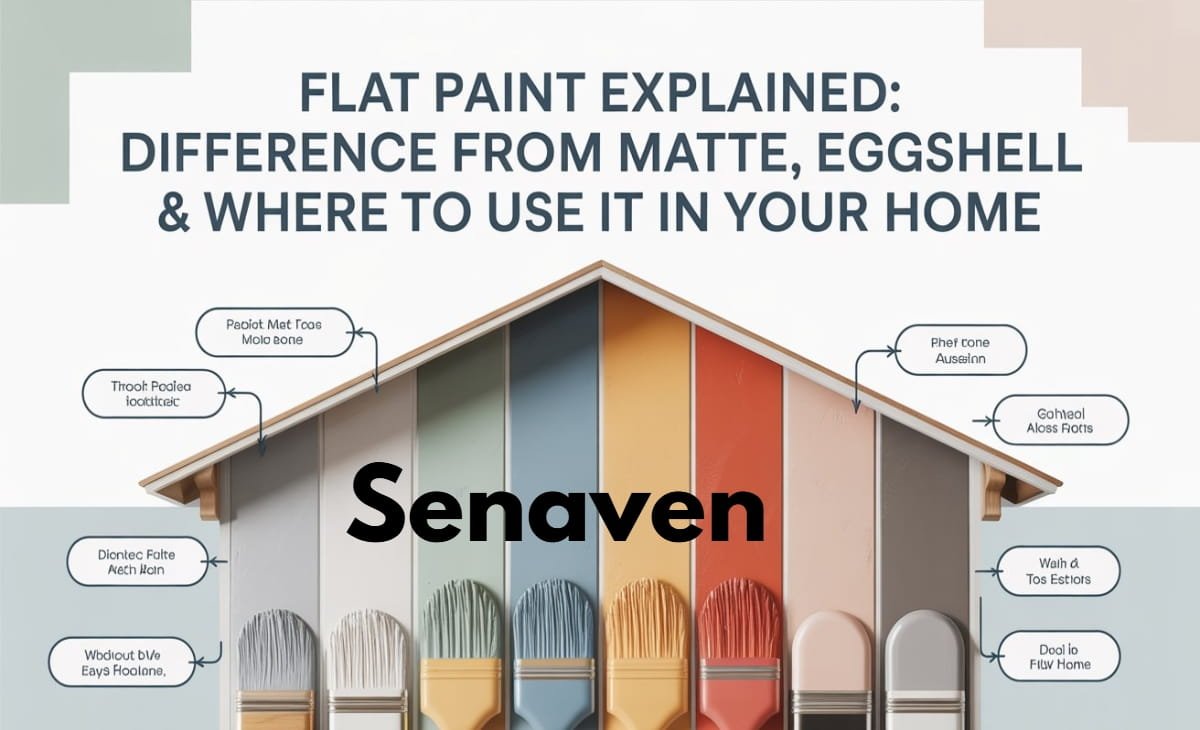
Choosing the Right Brush for Flat Paint
Using the right tools can make a big difference when applying It. Since flat paint doesn’t reflect light, application marks can sometimes be visible if not done properly. Fingerprints, scuffs, and stains are harder to remove, and cleaning can sometimes damage the finish. Learn tips to clean flat paint without damage for the best results.
Best Tools for Applying Flat Paint
- High-quality synthetic brush for smooth edges
- Roller with a medium nap for even coverage
- Extension pole for ceilings
A good brush and roller help ensure even coverage and reduce streaks, especially on large surfaces like walls and ceilings.
Pros and Cons of It
Pros
- Excellent at hiding imperfections
- Smooth, modern appearance
- Ideal for ceilings and low-traffic areas
Cons
- Difficult to clean
- Less durable than other finishes
- Not suitable for high-moisture areas
How to Choose the Right Paint Finish (Quick Guide)
Choosing between flat, matte, and eggshell comes down to how the space is used. If the area is purely decorative and doesn’t face wear and tear, It is a great option. For everyday living spaces, matte offers a better balance, while eggshell is more practical for high-traffic areas.
Think about durability first, then appearance. This approach helps avoid costly repainting later. Ceilings often have small imperfections, and flat paint helps hide them effectively. For more guidance, check the best paint options for ceilings.
Expert Advice: When to Choose It Over Other Finishes
From practical experience, It works best when your main goal is to achieve a clean, flawless look rather than long-term durability. If you’re dealing with older walls, patched surfaces, or uneven textures, flat paint can make a noticeable difference by softening those imperfections.
However, it’s important to think beyond just appearance. In real homes—especially those with kids, pets, or frequent activity—walls tend to get dirty quickly. In these situations, choosing flat paint for walls often leads to more maintenance and earlier repainting.
Conclusion
It is a great choice when your goal is a smooth, flawless look—especially on ceilings or imperfect walls. However, it’s not the most practical option for busy or moisture-prone areas.
If you understand where to use it and where to avoid it, It can significantly improve the overall look of your home. The key is balancing appearance with functionality so you don’t sacrifice durability for aesthetics.
FAQs
Is It good for walls?
It can be used on walls in low-traffic areas, but it’s not ideal for spaces that require frequent cleaning.
What is the difference between flat paint and matte paint color?
It has no sheen, while matte paint has a slight sheen that makes colors appear a bit richer.
Is flat paint better than eggshell?
It is better at hiding imperfections, while eggshell is more durable and easier to clean.
Can I use flat paint in a bathroom?
It’s not recommended because flat paint doesn’t handle moisture well and can get damaged over time.
Why is flat paint used for ceilings?
It hides imperfections and reduces light reflection, making ceilings look smooth and even.