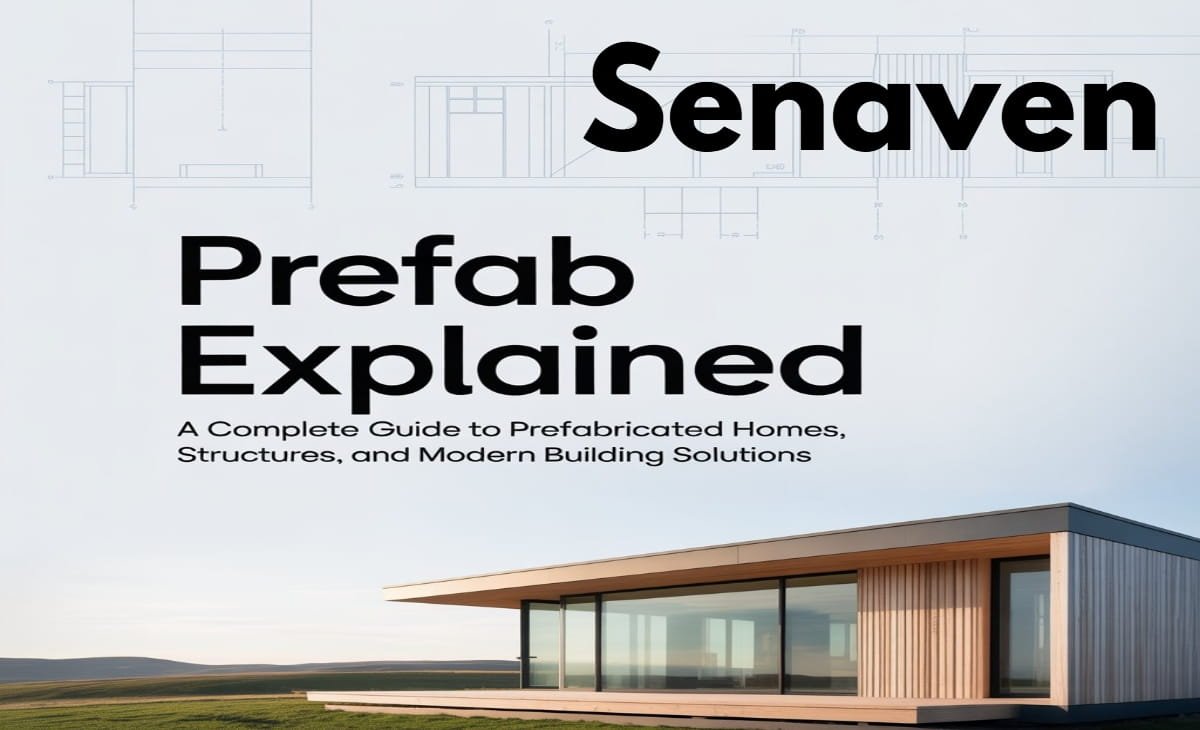
Prefab Explained: A Complete Guide to Prefabricated Homes, Structures, and Modern Building Solutions
If you’ve ever searched for prefab homes or prefabricated houses, chances are you’re looking for a faster, more affordable, and less stressful way to build. Traditional construction often comes with delays, budget overruns, and unpredictable results—something most homeowners want to avoid.
That’s where prefab (prefabricated construction) comes in. It’s not just a buzzword anymore; it’s a practical building method used worldwide for homes, offices, and even large commercial projects.
This guide is designed to fully answer what users are actually searching for—what It is, how prefab homes work, how much they cost, whether they’re durable, and whether they’re the right choice for you.
What Is Prefab (Prefabricated Construction)?
It, short for prefabricated, refers to a construction method where building components are manufactured in a factory and then transported to the site for assembly. Instead of building everything from scratch on-site, major parts like walls, floors, or entire modules are pre-built in controlled conditions.
This approach minimizes construction time, reduces material waste, and improves quality consistency. A prefabricated building can range from a small backyard unit to a full-sized residential home or even multi-story structures.
What Are Prefab Homes and Prefabricated Houses?
It homes—also known as prefabricated houses—are residential properties built using off-site manufacturing techniques. These homes are designed to look and function just like traditional houses but are constructed much more efficiently.
Unlike older perceptions, modern prefab homes are not limited in design, and with the help of smart floor plan ideas that make homes feel bigger and more functional, you can create spaces that are both efficient and visually appealing. You can find everything from compact minimalist units to large luxury homes with high-end finishes. The biggest difference lies in how they are built, not how they look.
For homeowners and renters, It homes are becoming a practical solution for:
- Faster move-in timelines
- Controlled budgets
- Flexible living spaces
Types of Prefabricated Structures (Explained Simply)
Not all It structures are the same, and understanding the types helps you make a smarter decision.
Modular homes are built in complete sections inside a factory and then assembled on a permanent foundation. They resemble traditional homes and are ideal for long-term living.
Panelized homes involve pre-built wall panels that are assembled on-site. This allows more design flexibility while still saving time compared to traditional construction.
Manufactured homes are fully constructed in a factory and delivered as a complete unit. These are typically more affordable and faster to install.
It structures are not limited to homes. They also include offices, classrooms, storage units, and even commercial buildings, making prefab a versatile solution across different needs.
Why Prefab Is Becoming So Popular
The growing interest in prefab construction isn’t random—it solves real-world problems that people face when building.
First, speed is a major advantage. Since construction and site preparation can happen simultaneously, projects are completed much faster than traditional builds.
Second, cost control is significantly better. Factory production reduces labor inefficiencies and material waste, helping homeowners stay within budget.
Another important factor is quality. Because components are built in controlled environments, there’s less risk of weather damage or construction errors.
It is also gaining popularity for its environmental benefits. It produces less waste and uses materials more efficiently, making it a smarter choice for eco-conscious buyers.
How Much Do Prefab Homes Cost?
One of the most common user questions is whether prefab homes are actually cheaper. The answer depends on several factors, but in many cases, they are more cost-effective than traditional construction.
Basic It homes can start from relatively affordable ranges, while mid-range and luxury prefab houses can match or exceed traditional home pricing depending on customization and materials.
However, it’s important to understand that the total cost doesn’t only include the house itself. You also need to consider land, foundation work, permits, utility connections, and transportation.
A practical example: someone choosing a prefab house to save money may still exceed their budget if they overlook site preparation or delivery costs. Planning these in advance is key to avoiding surprises.
Prefab vs Traditional Construction: Which One Is Better?
Choosing between prefab and traditional construction depends on your priorities. Prefab construction works especially well when you combine it with well-planned home layouts and efficient space design strategies, ensuring better usability from day one.
It construction is ideal if you want a faster timeline, predictable costs, and a streamlined building process. Traditional construction, on the other hand, offers maximum design freedom but often comes with longer timelines and higher uncertainty.
For most beginners and budget-conscious homeowners, prefab offers a more manageable and less stressful experience.
Are Prefabricated Buildings Durable and Safe?
A common concern is whether prefab homes are strong enough. The reality is that modern prefabricated buildings are built to meet strict building codes and safety standards.
Because components are manufactured with precision, they often have tighter joints and stronger structural integrity. Many It structures are designed to withstand harsh weather conditions and even seismic activity.
Durability largely depends on materials and maintenance rather than the construction method itself.
What Is a Prefab Structure Used For?
It structures are no longer limited to simple housing. Today, they are used in a wide range of applications.
They are commonly used for residential homes, but also for backyard offices, rental units, vacation homes, and temporary housing solutions. In commercial settings, prefab buildings are used for offices, schools, and healthcare facilities.
This flexibility makes prefab an attractive option for both personal and investment purposes.
What Is “Prefab Mod” and Where Does It Fit?
The term prefab mod can have different meanings depending on context. In construction, it often refers to modular prefab systems where standardized units are combined in different ways to create custom layouts.
In some cases, especially online, “prefab mod” may also relate to pre-designed modifications or layouts used in digital planning or design tools. Regardless of the context, the core idea remains the same—using pre-built components to save time and effort.
Step-by-Step: How Prefab Construction Works
Understanding the process helps you set realistic expectations:
- The project begins with planning and design, where layout and materials are finalized
- Components are then manufactured in a factory
- Meanwhile, the construction site is prepared with foundation and utilities
- Prefabricated parts are transported to the site
- Assembly takes place, followed by finishing work like electrical and interior setup
This streamlined process is what makes It significantly faster than traditional construction.
Pros and Cons of Prefab Construction
Advantages:
- Faster construction timelines
- Better cost control
- Consistent quality
- Reduced environmental impact
Limitations:
- Transportation constraints for large modules
- Limited flexibility in extreme custom designs
- Local regulations may affect installation
When Should You Choose a Prefab House?
It is a great option if you want to build quickly, stay within a fixed budget, or add additional living space like a rental unit or guest house.
However, if your goal is a highly complex, fully customized architectural design, traditional construction might still be the better fit.
Practical Tips Before Buying a Prefab Home
Before committing to a prefab house, take time to research local building regulations and zoning laws. Work with experienced manufacturers who have a proven track record, and always review material quality and design options carefully.
It’s also helpful to visit a model It home or request detailed plans so you know exactly what you’re getting.
Expert Advice: What Professionals Say About Prefab Construction
Experts agree that prefab construction works best when it’s properly planned, not just treated as a low-cost shortcut. The real advantage comes from better quality control, faster timelines, and efficient use of materials in a factory setting.
They also stress that site preparation—like foundation and utilities—is just as important as the prefab structure itself. Choosing the right type of prefab based on your needs and focusing on long-term quality over short-term savings can make a significant difference in results.
Conclusion
It construction is no longer an alternative—it’s a mainstream solution for modern building challenges. From prefab homes to large prefabricated buildings, this method offers speed, efficiency, and cost control that traditional construction often struggles to match.
For homeowners, renters, and beginners, prefab provides a practical path to building smarter without unnecessary delays or complications. If planned correctly, it can be one of the most efficient ways to create a comfortable and long-lasting living space.
FAQs
What does prefab mean in simple terms?
It means building parts of a structure in a factory and assembling them on-site.
Are prefab homes cheaper than traditional homes?
They are often more cost-effective, but total cost depends on land, design, and installation factors.
What is the difference between prefab and modular homes?
Modular homes are a type of It home where sections are built as complete modules and assembled on-site.
How long does it take to build a prefab house?
Most prefab homes can be completed within a few weeks to a few months, depending on complexity.
Can prefab homes be customized?
Yes, modern prefab homes offer flexible layouts, materials, and design options to suit different needs.