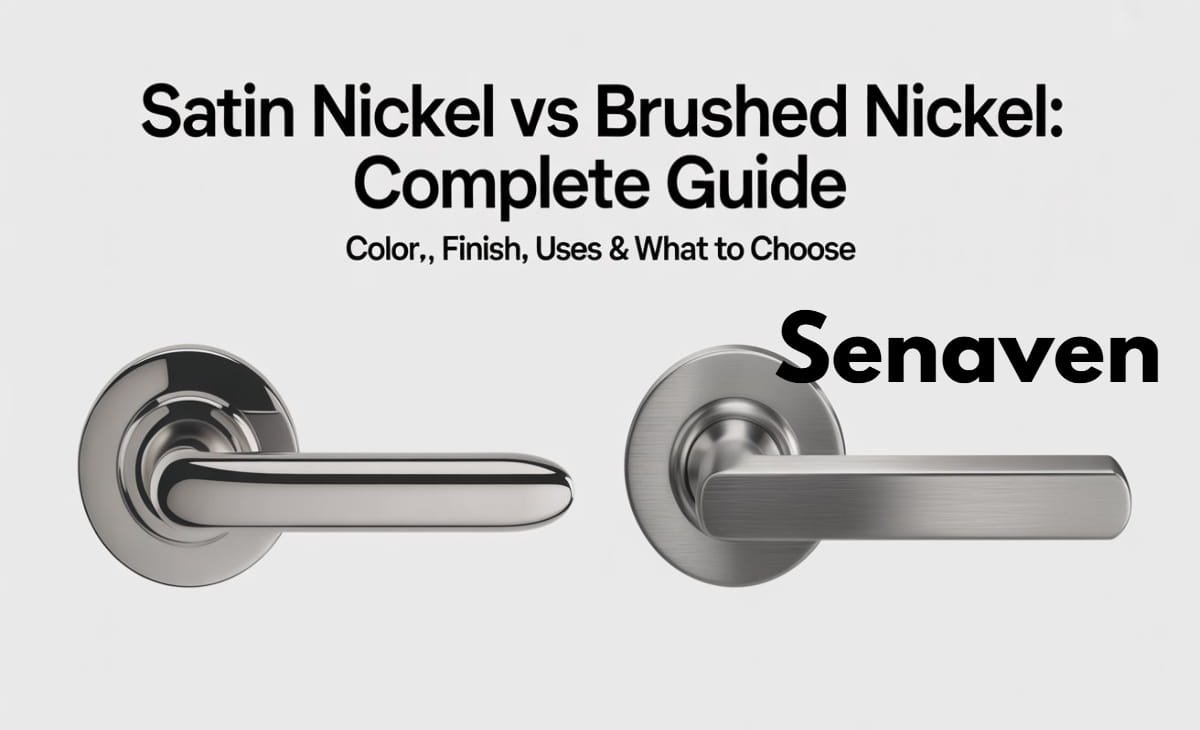
Satin Nickel vs Brushed Nickel: Complete Guide (Color, Finish, Uses & What to Choose)
If you’ve been searching for satin nickel, chances are you’ve come across multiple similar finishes—brushed nickel, chrome, and others that look almost identical online but very different in real life.
This confusion often leads to costly mistakes. You pick cabinet pulls or door handles thinking they’ll match your space, but once installed, something feels “off.”
This guide clears that up completely. You’ll not only understand satin nickel vs brushed nickel, but also how satin nickel looks, where to use it (doors, cabinets, hinges), and how it compares to chrome—especially when looking at a detailed brushed nickel vs chrome comparison, and even whether It spray paint is worth it.
By the end, you’ll know exactly what to choose for your home—based on practicality, not just appearance.
What Is Satin Nickel Finished?
It is a plated metal finish with a soft, smooth appearance and a subtle sheen. It’s not mirror-like, but it’s not completely matte either—think of it as sitting right in the middle.
What makes it stand out is its balanced look. It reflects a bit of light while still feeling warm and understated, which is why it works well in both modern and slightly traditional spaces.
Unlike rougher finishes, It has a more uniform surface. This consistency gives fixtures like faucets, cabinet pulls, and door handles a clean and refined appearance without looking too shiny.
Satin Nickel Color: What Does It Actually Look Like?
One of the most searched questions is about satin nickel color, and it’s easy to see why—it doesn’t look exactly the same in every setting.
In most cases, It appears as a soft silver with warm undertones. Under warm lighting, it can lean slightly golden. Under cool lighting, it may look closer to light gray.
This adaptability is actually one of its biggest advantages. It blends easily with:
- White cabinets
- Wooden finishes
- Neutral color palettes
However, if you’re pairing it with very cool tones like bright chrome or stark gray, the warmth of satin nickel may become more noticeable.
Satin Nickel vs Brushed Nickel: What’s the Real Difference?
At a glance, these two finishes look similar, but the difference becomes clear once you focus on texture and usability.
It has a smoother, more polished surface, while brushed nickel has a visible texture created by fine brush strokes. That texture makes brushed nickel less reflective and more forgiving in everyday use.
From a practical standpoint, brushed nickel hides fingerprints, water spots, and scratches better. Satin nickel, while more elegant, tends to show marks more easily—especially in high-touch areas.
If you’re choosing based on appearance, It feels cleaner and slightly more modern. If you’re choosing based on maintenance, brushed nickel is the easier option for busy households.
Satin Nickel vs Chrome: Which One Is Better?
Another common comparison is satin nickel vs chrome, and here the difference is more obvious.
Chrome is highly reflective and has a cool, almost blue-toned shine. It’s often used in ultra-modern or high-gloss designs. It, in contrast, is softer and warmer, which makes it easier to live with long-term.
In real homes, chrome tends to show fingerprints, water spots, and scratches very quickly. It does a better job of softening those imperfections, although it’s not as forgiving as brushed finishes.
If your space is sleek and contemporary with sharp contrasts, chrome might fit better. But if you want something more subtle and versatile, satin nickel usually feels more comfortable and less harsh.
Where to Use Satin Nickel in Your Home
Satin Nickel Door Handles
It door handles are a popular choice because they strike a balance between style and practicality. They don’t feel too shiny like chrome, but they still look refined enough for modern interiors.
In bedrooms, living rooms, and hallways, they blend easily with different color schemes. However, in high-traffic areas like main entrances, you may notice fingerprints more often compared to brushed finishes.
Satin Nickel Cabinet Pulls
For kitchens and bathrooms, satin nickel cabinet pulls are often chosen for their clean and cohesive look. They pair especially well with white cabinets, shaker-style designs, and natural wood tones—especially if you’ve already focused on choosing the right kitchen cabinets for your space.
The only downside is maintenance. In busy kitchens where cabinets are touched frequently, you may need to wipe them more often to keep them looking fresh.
Satin Nickel Hinges
It hinges are a subtle but important detail. When matched with door handles, they create a consistent, well-thought-out look.
They work best in visible areas like interior doors where small details matter. If hinges are exposed, using the same finish avoids visual mismatch.
Is Satin Nickel Good for Bathrooms and Kitchens?
It performs well in both spaces, but your choice should depend on usage.
In bathrooms, it creates a calm, spa-like feel. It works especially well for faucets, towel bars, and shower fixtures where you want a softer finish instead of a reflective one.
In kitchens, it looks elegant but requires more upkeep. Grease and fingerprints can show more easily, so it’s better suited for kitchens that aren’t heavily used or where aesthetics matter more than convenience.
Satin Nickel Spray Paint: Is It Worth Using?
Many homeowners consider satin nickel spray paint as a budget-friendly way to update old hardware.
It can work well for small DIY projects like:
- Old cabinet handles
- Light fixtures
- Decorative hardware
However, the finish is not as durable as factory-applied satin nickel. Over time, especially in high-touch areas, the paint may chip or wear off.
If you’re updating something temporary or decorative, spray paint is a good option. But for frequently used items like door handles, investing in actual satin nickel hardware is the better long-term choice.
Pros and Cons of Satin Nickel
Pros:
- Elegant, soft metallic look
- Warmer tone than chrome
- Works with many interior styles
- Ideal for modern and transitional spaces
Cons:
- Shows fingerprints more than brushed finishes
- Requires regular cleaning
- Can highlight wear in high-use areas
How to Choose Between Satin Nickel and Other Finishes
Choosing the right finish isn’t just about looks—it’s about how your home functions daily.
If your priority is a clean, modern aesthetic and your space isn’t heavily used, It is a strong choice. It adds subtle sophistication without being overwhelming.
If you have a busy household, kids, or high-traffic areas, brushed nickel may be more practical because it hides wear better.
And if you’re deciding between satin nickel and chrome, think about lighting and overall tone. Chrome feels sharper and cooler, while It feels softer and more natural.
Can You Mix Satin Nickel with Other Finishes?
Yes, but it needs to be intentional. It pairs well with matte black, brushed nickel, and even brass if done carefully.
The key is consistency within a space. For example, all cabinet hardware in a kitchen should match, while lighting fixtures can introduce a secondary finish for contrast.
Mixing works best when it looks designed—not accidental.
Expert Advice: Choosing Satin Nickel the Right Way
When selecting satin nickel, focus on both lighting and usage. This finish can look warmer or cooler depending on your room’s lighting, so it’s always best to test it in your space before finalizing.
Use It in areas where style matters more than heavy use, like bathrooms or bedrooms. For high-touch spaces such as kitchens, be ready for a bit more cleaning.
Keep finishes consistent within the same room to avoid a mismatched look, and try to choose hardware from the same brand to maintain a uniform tone. Small details like this make your space look more polished and well-designed.
Conclusion
It is one of the most versatile finishes you can choose. It sits comfortably between shiny and matte, modern and classic, making it a safe yet stylish option for many homes.
If you want a polished, elegant look and don’t mind a bit of maintenance, It is an excellent choice. But if durability and low upkeep matter more, especially in busy areas, you might find brushed nickel more practical.
The right decision comes down to how you live in your space—not just how you want it to look.
FAQs
What is satin nickel finish used for?
It is commonly used for door handles, cabinet pulls, faucets, hinges, and light fixtures due to its soft, versatile appearance.
Does satin nickel look more like chrome or brushed nickel?
It sits between the two—less shiny than chrome but smoother and slightly more reflective than brushed nickel.
Is It durable?
Yes, but it may show fingerprints and minor wear more than textured finishes like brushed nickel.
Can I use satin nickel in the kitchen?
Yes, especially for cabinet pulls and faucets, but expect to clean them more often in high-use kitchens.
IsIt spray paint a good alternative?
It works for low-use or decorative items, but it’s not as durable as real satin nickel finishes for everyday hardware.