Common Mistakes When Choosing Brushed Nickel Cabinet Pulls (And How to Avoid Them)
Cabinet hardware is no longer just a finishing touch—it’s a functional upgrade that directly affects how your kitchen or bathroom looks and feels every day. In 2026, homeowners searching for brushed nickel cabinet pulls aren’t just looking for style—they want the right size, the right combination (pulls vs knobs), and confidence that what they buy will actually work in their space.
This updated guide is designed to fully match real user intent. Whether you’re searching for 3-inch or 5-inch pulls, comparing pulls vs knobs, styling white cabinets, or deciding between Amazon and Home Depot, everything you need is covered here in a practical, experience-based way.
Why Brushed Nickel Cabinet Pulls Remain a Top Choice
Brushed nickel continues to dominate because it solves multiple problems at once. Its soft, slightly textured finish reduces fingerprints, blends easily with most appliances, and avoids the overly shiny look that many homeowners now try to avoid.
In real projects, it consistently performs better long-term than trend-heavy finishes. Matte black may look striking at first, but brushed nickel tends to age more gracefully and doesn’t show wear as quickly. It also works equally well in modern, transitional, and even traditional kitchens, making it a safe investment if resale value matters.
Choosing the Right Size (3-Inch, 5-Inch & Beyond)
Size confusion is one of the biggest reasons people end up returning cabinet hardware.
The most common sizes people search for—3-inch and 5-inch brushed nickel cabinet pulls—refer to center-to-center hole spacing, not the full length of the pull. This detail is often misunderstood and leads to ordering mistakes.
A 3-inch pull is typically used for smaller cabinet doors and narrow drawers. It’s compact, subtle, and works well when you don’t want hardware to dominate the design. On the other hand, 5-inch pulls are more versatile and are now considered a modern standard for medium-sized drawers and cabinets.
In today’s design trends, longer pulls are becoming more popular—even on standard drawers—because they create a more custom, high-end appearance. From experience, slightly longer pulls almost always look better than undersized ones. Small pulls tend to feel outdated and visually weak.
If you are replacing existing hardware, always measure the exact hole spacing before buying. If you are starting fresh, base your choice on drawer width rather than guessing.
Brushed Nickel Pulls vs Knobs: Which Should You Choose?
This is one of the most common real-world decisions homeowners struggle with: should you go with pulls, knobs, or a mix of both?
Pulls are generally more practical. They provide a better grip, especially for heavy drawers, and are easier to use in busy kitchens. Knobs, however, are simpler, more affordable, and often used for upper cabinets or smaller doors.
The most balanced and widely used approach today is mixing both. For example, using pulls on drawers for functionality and knobs on upper cabinets for simplicity creates a clean, intentional look without overloading the design.
From hands-on experience, all-pull kitchens feel more modern, while knob-and-pull combinations feel more traditional or transitional. The right choice depends on your cabinet style and how you use the space daily.
How They Look on White Cabinets (Most Searched Use Case)
One of the most popular design searches right now is brushed nickel cabinet pulls on white cabinets—and for good reason.
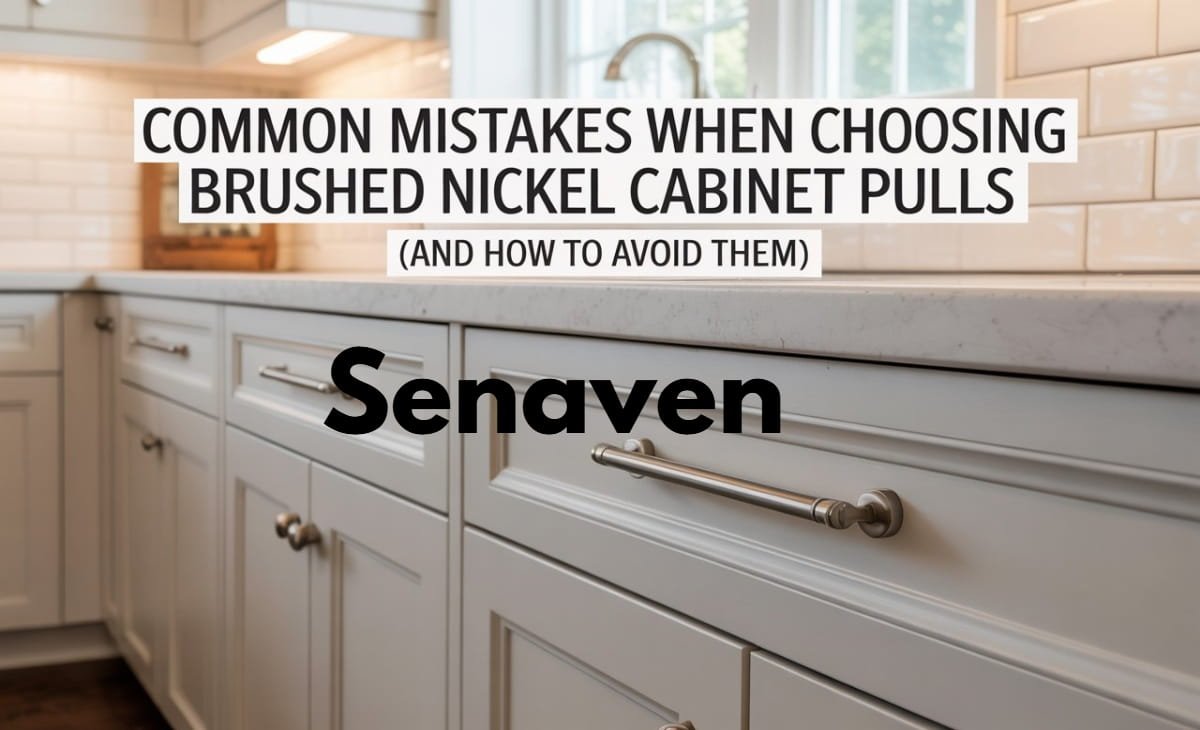
This combination works exceptionally well because it creates a soft, clean contrast without feeling harsh. Unlike black hardware, which creates a bold and high-contrast look, brushed nickel blends more naturally and keeps the space feeling light and open.
In real kitchens, this pairing is especially effective when combined with stainless steel appliances and light countertops like quartz or marble. It creates a cohesive, balanced design that doesn’t feel overly trendy.
If your kitchen lacks natural light, brushed nickel is also a safer choice than darker finishes, which can make the space feel heavier.
Brushed nickel pairs naturally with neutral walls and light countertops. Thoughtful pairing—matching hardware with wall and trim colors—creates a polished, cohesive look.
Should You Use Backplates with Cabinet Pulls?
Another commonly searched variation is brushed nickel cabinet pulls with backplate, and this is where design meets practicality.
Backplates are small metal plates installed behind the pull. They serve two main purposes: protecting cabinet surfaces from wear and covering old holes when replacing hardware.
In older kitchens or when switching from knobs to pulls, backplates can save you from costly repairs or refinishing. They also add a slightly more traditional or decorative look.
However, in modern kitchens, most homeowners skip backplates to keep the design clean and minimal. Based on experience, backplates are best used when:
- You’re upgrading old cabinets with visible wear
- You need to cover mismatched drill holes
- You prefer a more classic or detailed style
Where to Buy: Amazon vs Home Depot (Real Comparison)
Many users specifically search for brushed nickel cabinet pulls on Amazon or Home Depot, and each option serves a different purpose.
Amazon is ideal if you want variety and competitive pricing. You’ll find a huge range of styles, sizes (including 3-inch and 5-inch options), and bulk deals. It’s a good choice for budget-conscious projects or when you want to explore different designs quickly.
Home Depot, on the other hand, offers a more reliable in-store experience. You can physically test the weight, grip, and finish before buying, which is extremely valuable. Their products also tend to have more consistent quality control.
From practical experience, the best approach is to shortlist online and test in-store if possible. Many homeowners regret bulk-buying hardware online without ever holding it first.
Installation & Placement: What Most Guides Don’t Tell You
Installation is where many projects go wrong—not because of the hardware, but because of poor planning.
Placement should always feel natural when you open a cabinet. For drawers, pulls are typically centered. For cabinet doors, they are placed on the opposite side of the hinge, either near the top or bottom depending on the cabinet position.
Modern kitchens are also shifting toward slightly higher placement on drawers for better ergonomics. This small adjustment can make daily use noticeably more comfortable.
Another detail often overlooked is consistency. Even a few millimeters of misalignment can make cabinets look unprofessional. Using a jig tool is one of the simplest ways to avoid this problem.
New Insights Most Articles Miss
One thing that becomes clear after working on real kitchens is that hardware decisions are rarely just about looks.
First, weight matters more than people expect. Solid pulls feel better, last longer, and don’t loosen as easily. Lightweight options may save money upfront but often feel cheap over time.
Second, lighting dramatically changes how brushed nickel appears. Under warm lighting, it looks softer and warmer. Under cool lighting, it can appear closer to chrome. Always test before committing.
Third, mixing finishes is now common—but it must be intentional. Brushed nickel can work alongside black or brass, but one finish should clearly dominate to avoid visual clutter.
Brushed nickel ages gracefully and works in modern, transitional, and traditional kitchens. For homeowners unsure which metal finish to choose, comparing metal finishes for your cabinets helps make a confident decision
Practical Buying Checklist
- Measure exact hole spacing (especially for 3-inch or 5-inch replacements)
- Decide between pulls, knobs, or a mix
- Check how the finish looks under your home lighting
- Test grip comfort and clearance
- Choose solid construction when possible
- Consider backplates only if needed
- Avoid bulk buying before testing a sample
Expert Advice for a Confident Purchase
The biggest mistake homeowners make is rushing hardware decisions at the end of a renovation. By that point, fatigue sets in, and choices become impulsive.
In reality, cabinet pulls are something you interact with multiple times every day. They should feel effortless, look consistent, and match the overall design without standing out too much.
If you focus on the right size, comfortable grip, and a finish that works with your lighting and cabinets, you’ll get a result that feels intentional—not accidental.
FAQs
Are brushed nickel cabinet pulls still in style in 2026?
Yes, they remain one of the most reliable and widely used finishes because they balance modern and timeless design.
What’s the difference between 3-inch and 5-inch cabinet pulls?
The measurement refers to the distance between screw holes. 3-inch is smaller and more compact, while 5-inch offers a more modern and versatile look.
Can I mix knobs and pulls together?
Yes, this is a very common approach. Use pulls for drawers and knobs for cabinet doors for a balanced design.
Do brushed nickel pulls work with white cabinets?
They are one of the best combinations available. They create a clean, soft contrast without being too bold.
Are backplates necessary?
Not always. They are mainly useful for covering old holes or adding a traditional touch.
Where is the best place to buy them?
Amazon offers variety and pricing, while Home Depot provides better in-person quality checks. The best choice depends on your priorities.
Conclusion
Choosing the right brushed nickel cabinet pulls isn’t just about appearance—it’s about creating a space that works well every single day.
When you understand sizing (especially 3-inch vs 5-inch), choose between pulls and knobs thoughtfully, and match the finish to your cabinets and lighting, the results feel polished and professional.
Take your time, test before buying, and prioritize comfort along with design. Done right, this small upgrade can completely transform the look and usability of your kitchen or bathroom.